The workplace is evolving at an unprecedented pace. Artificial intelligence (AI), automation, and changing customer expectations are transforming job roles across industries, making continuous learning a strategic business priority. According to leading workforce studies, many of today’s roles will continue to evolve over the next few years, requiring organizations to rethink how they develop talent and prepare employees for the future.
For Learning and Development (L&D) leaders, the challenge is no longer deciding whether employees need new skills. The more important question is where to focus learning investments. Should organizations strengthen employees’ capabilities within their existing roles through upskilling, or prepare them for entirely new responsibilities through reskilling?
The answer isn’t about choosing one approach over the other. Organizations that build resilient, high-performing workforces understand that both strategies play an important role. The key is knowing when to apply each one and aligning learning initiatives with broader business goals, workforce planning, and future capability needs.
Upskilling vs. Reskilling: What’s the Difference?
Although often mentioned together, upskilling and reskilling solve different business challenges. Upskilling focuses on helping employees build new capabilities within their current roles as technologies, processes, and customer expectations evolve. Reskilling prepares employees to transition into entirely new roles when business models change, new functions emerge, or existing roles are significantly transformed.
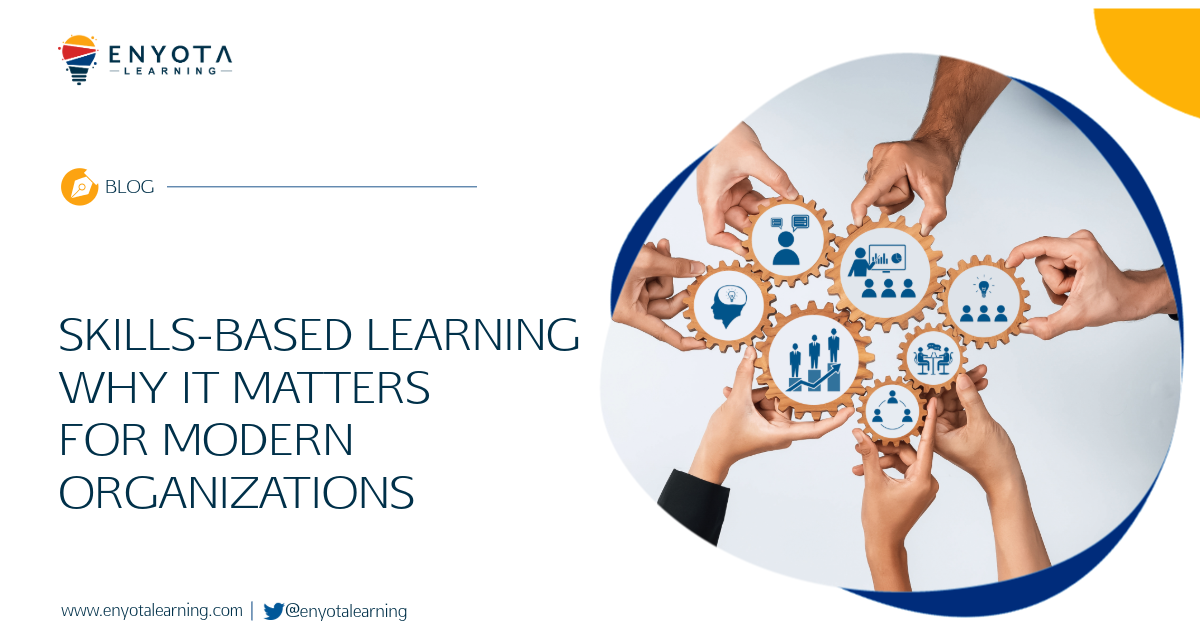
This distinction is becoming increasingly important as organizations adopt a skills-based learning approach, where capabilities take precedence over job titles. By focusing on transferable skills rather than fixed roles, organizations can respond more effectively to changing business demands while creating greater opportunities for employee growth. This approach is explored further in eNyota’s blog on Skills-Based Learning: Why It Matters for Modern Organizations, which highlights why building adaptable capabilities is becoming a cornerstone of modern workforce development.
Rather than treating upskilling and reskilling as separate initiatives, leading organizations use both to create a workforce that can adapt, innovate, and contribute to long-term business success.
When Upskilling Delivers Greater Business Value
Upskilling is the right strategy when employees already possess valuable organizational knowledge but need additional capabilities to succeed in evolving roles. As AI-enabled tools, digital platforms, and data-driven processes become part of everyday work, many jobs are changing rather than disappearing. In these situations, investing in existing talent often delivers greater value than recruiting externally.
Consider a sales team adopting AI-powered CRM platforms or a project management team using predictive analytics to improve decision-making. These employees don’t need new careers; they need practical learning experiences that help them confidently apply new technologies within their existing responsibilities. Similarly, managers are increasingly expected to develop skills in coaching, change management, and data-informed leadership as organizations navigate continuous transformation.
This is where eNyota helps organizations create meaningful learning experiences that translate into measurable business outcomes. Through Content Creation Services, organizations can develop learning tailored to their business context, while Scenario-Based Learning allows employees to practise decision-making in realistic situations before applying those skills on the job. For geographically dispersed or frontline workforces, Mobile Learning makes development opportunities accessible anytime and anywhere, enabling learning to become part of the daily workflow rather than a separate activity.
Equally important is ensuring employees remain engaged throughout the learning journey. Organizations that invest in strong learner engagement strategies are more likely to see higher participation, improved knowledge retention, and better application of new skills in the workplace. Interactive learning experiences, personalization, and real-world relevance all contribute to making learning more effective and sustainable.
When Reskilling Is the Right Strategic Choice
While upskilling enhances existing capabilities, some business changes require employees to develop entirely new skill sets. Automation, digital transformation, organizational restructuring, and the emergence of new technologies are creating roles that didn’t exist just a few years ago. Rather than relying solely on external recruitment, many organizations are choosing to prepare existing employees for these new opportunities through structured reskilling initiatives.
This approach offers benefits that extend beyond addressing skills shortages. Reskilling helps retain institutional knowledge, reduces recruitment costs, supports internal talent mobility, and reinforces employee confidence during periods of change. Employees are also more likely to remain engaged when they see clear opportunities to grow within the organization rather than being displaced by transformation.
Successful reskilling begins with understanding future workforce requirements rather than reacting to immediate gaps. Through its Learning Consultancy Services, eNyota works with organizations to identify capability needs, align learning with business priorities, and design structured development journeys that prepare employees for future roles. This strategic approach ensures learning investments contribute directly to organizational performance instead of functioning as isolated training initiatives.
Organizations that integrate reskilling into a high-impact learning strategy are often better positioned to respond to market changes, embrace emerging technologies, and build a workforce capable of supporting long-term business growth.
Building a Skills Strategy That Supports Business Growth
The most successful organizations don’t view upskilling and reskilling as separate learning initiatives. Instead, they build a skills strategy that aligns workforce capabilities with long-term business objectives. This shift from role-based training to capability-based development enables organizations to respond more effectively to market changes, technology adoption, and evolving customer expectations.
Today’s L&D leaders are increasingly using skills intelligence and workforce planning to identify future capability gaps before they impact business performance. Rather than waiting for skills shortages to emerge, they proactively map existing capabilities against future business needs and create targeted learning pathways that support both employee growth and organizational success.
This approach aligns with many of the priorities shaping corporate learning today, including AI-enabled personalization, data-driven decision-making, and continuous capability development. These themes are explored further in eNyota’ s Top L&D Priorities 2026 and Designing Personalized Learning Experiences in the Age of AI blogs, both of which highlight how organizations are creating more agile and learner-centric development strategies.
Turning this strategy into measurable business outcomes requires learning experiences that are relevant, engaging, and practical. eNyota helps organizations design these experiences through a combination of instructional design expertise, custom digital learning, and scalable delivery models that support continuous learning across the employee lifecycle.
Scaling Learning Across Global Teams
As organizations expand across regions and support increasingly distributed workforces, delivering learning consistently becomes just as important as designing it effectively. Employees expect learning that is accessible, flexible, and relevant, regardless of where they work or which language they speak.
To meet these expectations, many organizations are adopting blended learning ecosystems that combine self-paced digital learning with Virtual Instructor-Led Training (VILT). This approach offers the flexibility of online learning while preserving the collaboration and interaction needed for more complex topics. It’s also one of the reasons blended learning continues to gain momentum, as explored in eNyota’s Why Blended Learning Works in 2026 blog.
For global organizations, scaling learning also means ensuring content is culturally relevant and linguistically accurate. eNyota’s Translation and Localisation Solutions help organizations deliver consistent learning experiences across international teams while respecting regional languages, cultures, and compliance requirements.
Organizations looking to modernize legacy training can also benefit from eLearning Conversion Services, transforming existing classroom materials and older digital courses into engaging, modern learning experiences. For businesses with ongoing learning needs, a Dedicated eLearning Development Team provides the flexibility to scale content development efficiently while maintaining consistency, quality, and faster turnaround times.
Conclusion
Upskilling and reskilling are not competing strategies. Together, they help organizations build a workforce that can adapt to changing technologies, evolving business priorities, and future skills demands. The key is understanding when to strengthen existing capabilities and when to prepare employees for entirely new roles.