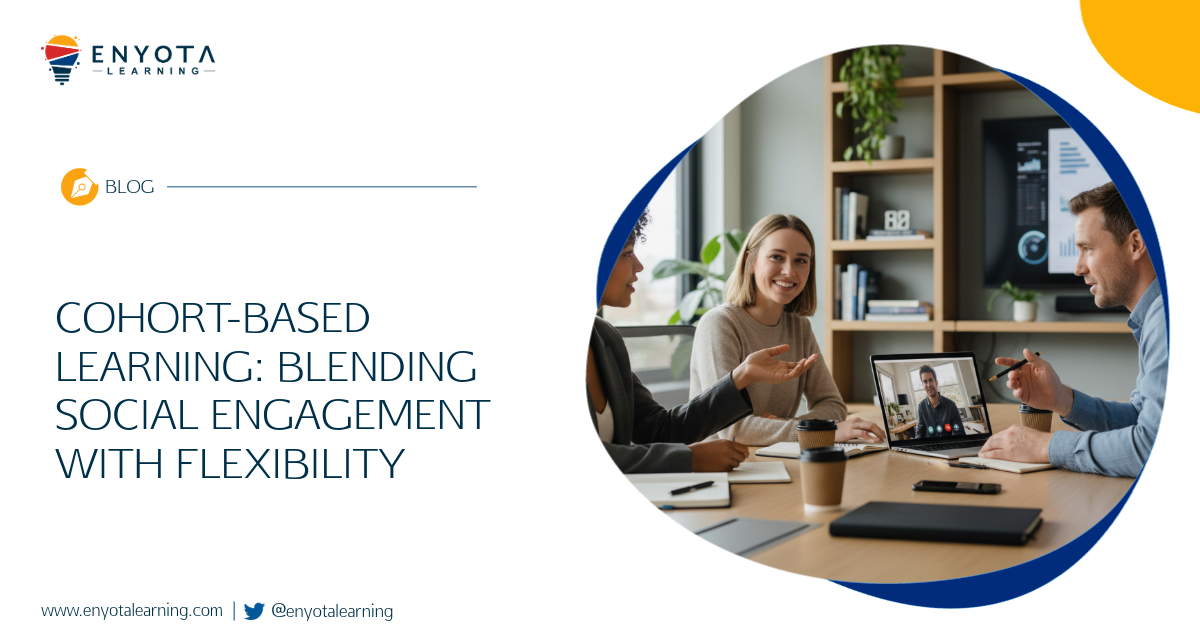
Learning Doesn’t End When the Course Does
The expectations of modern learners have evolved dramatically. Completing an online course or attending a virtual classroom is no longer the finish line. Learners increasingly want ongoing access to experts, peers, practical discussions, and opportunities to continue applying what they’ve learned.
For training providers, this presents a significant opportunity.
Instead of viewing learning as a series of isolated events, leading organizations are creating learning communities that keep learners connected long after formal training ends. These communities foster collaboration, encourage knowledge sharing, and strengthen learner engagement while building lasting relationships between providers and their audiences.
As highlighted in our blog on Better Learning, Not More Training, today’s learners value continuous support over one-time training events. Learning communities extend that philosophy by creating spaces where learning becomes an ongoing experience rather than a scheduled activity.
For training companies, this evolution is becoming more than a learner expectation. It is becoming a genuine competitive advantage.
What Is a Learning Community?
A learning community is an environment where learners continue to interact beyond formal training. Participants ask questions, share experiences, solve problems together, and learn from both experts and peers.
Unlike traditional discussion forums that often become inactive, successful learning communities are carefully designed experiences supported by facilitators, engaging content, collaborative activities, and regular interaction.
These communities can exist alongside digital learning platforms, Virtual Instructor-Led Training (VILT) programs, blended learning journeys, or certification pathways, ensuring that learning remains active long after the final assessment.
When combined with well-designed programs, learning communities help maintain learner momentum between live sessions while encouraging continued participation.
Why Communities Are Becoming Essential
The workplace is changing faster than ever. New technologies, AI-driven workflows, and rapidly evolving skills mean that knowledge quickly becomes outdated.
Employees need continuous learning instead of periodic training.
Organizations therefore expect training providers to support ongoing capability development rather than simply delivering courses.
Learning communities help bridge this gap by providing learners with a place to:
- Ask practical questions
- Learn from real workplace experiences
- Share best practices
- Access updated resources
- Build professional networks
- Stay engaged with evolving topics
Instead of delivering knowledge once, providers become long-term learning partners.
This approach aligns closely with the growing emphasis on lifelong learning discussed in our article on Skills-Based Learning, while adding the collaborative dimension that many organizations are now prioritizing.
Five Ways Learning Communities Create Competitive Advantage
They Dramatically Increase Learner Engagement
One of the biggest challenges facing training providers is maintaining learner engagement after formal programs conclude.
Communities solve this naturally.
When learners regularly participate in discussions, attend community events, contribute ideas, or solve real-world problems together, they remain connected to both the learning and the provider.
This sustained engagement increases knowledge retention while creating stronger emotional connections with the training brand.
Interactive learning assets, discussion prompts, and collaborative activities created through our Content Creation Services can help organizations design experiences that encourage ongoing participation rather than passive content consumption.
They Improve Learning Transfer
Research consistently shows that learning becomes more effective when learners discuss, apply, and teach concepts to others.
Communities encourage exactly these behaviours.
Rather than completing a course and returning to work alone, learners continue exploring concepts with peers facing similar challenges.
Members share implementation successes, discuss obstacles, and exchange practical solutions.
This continuous reinforcement significantly improves learning transfer and workplace application.
Providers offering Scenario-Based Learning experiences can extend these realistic simulations into community discussions where learners compare decisions, reflect on outcomes, and continue improving their skills together.
Communities Generate Valuable Business Insights
Every interaction inside a learning community provides valuable feedback.
Training providers gain direct visibility into:
- Frequently asked questions
- Emerging learner needs
- Skill gaps
- Industry challenges
- Popular discussion topics
- Future content opportunities
Instead of relying solely on post-course surveys, providers receive continuous insight into evolving learner expectations.
These insights can guide future learning strategies, curriculum updates, and program design through expert Learning Consultancy Services, helping organizations remain aligned with changing business priorities.
Communities Build Stronger Customer Loyalty
Many training providers compete on content quality alone.
However, content is becoming increasingly easier to create.
Communities are far more difficult to replicate.
When learners develop professional relationships within a provider’s ecosystem, switching to another provider becomes less attractive.
Members return for discussions, networking opportunities, expert sessions, new resources, and collaborative problem solving.
Over time, the community itself becomes one of the provider’s strongest value propositions.
This creates higher customer retention while encouraging repeat business across new learning programs.
Communities Support Scalable Personalized Learning
Personalization has become one of the biggest priorities in modern L&D.
While AI can recommend courses, communities add the human layer that technology alone cannot provide.
Different learners naturally gravitate toward discussions that match their experience, industry, interests, and career goals.
This creates highly personalized learning journeys without requiring entirely customized content for every individual.
Organizations delivering Mobile Learning can make these communities even more accessible by enabling learners to participate in discussions, share insights, and consume knowledge from anywhere, making learning a continuous part of daily work.
Technology Alone Doesn’t Build Communities
Many organizations assume launching a discussion forum automatically creates a learning community.
Unfortunately, inactive forums are common because successful communities require thoughtful design.
Training providers should focus on creating experiences that encourage participation through expert facilitation, meaningful conversations, regular events, recognition, and fresh content.
Interactive elements such as Game-Based eLearning, engaging Animated Explainer Videos, and collaborative learning challenges help maintain momentum while making participation enjoyable.
Communities also benefit from multilingual support, ensuring global learners feel equally included. High-quality eLearning Translation and Localisation Solutions make collaborative learning accessible across diverse regions and cultures.
Communities Strengthen Blended Learning Experiences
The most successful training providers are combining formal learning with continuous collaboration.
A learner might begin with a self-paced digital course, participate in live workshops through VILT, complete workplace assignments, and continue discussing real-world applications inside a learning community.
This creates a seamless learning journey instead of disconnected learning events.
Providers also benefit from modernizing existing training materials through eLearning Conversion Services, transforming legacy classroom content into engaging digital resources that naturally integrate with community discussions.
When additional development capacity is required, organizations can scale efficiently with a Dedicated eLearning Development Team, ensuring new community resources, learning assets, and engagement initiatives are delivered consistently.
Preparing for the Future of Learning
The future of workplace learning is increasingly social, collaborative, and continuous.
Artificial intelligence will undoubtedly personalize recommendations and automate administrative tasks, but meaningful conversations, shared experiences, and peer learning will remain uniquely human.
Training providers that invest in learning communities today are positioning themselves beyond content delivery.
They become trusted partners who support learners throughout their professional growth, helping organizations build stronger capabilities while creating lasting learner relationships.
In an increasingly competitive market, that ongoing connection may become the differentiator that matters most.
Conclusion
The most successful training providers are no longer measured solely by the quality of their courses. They are recognized by the learning ecosystems they create.
Learning communities increase engagement, improve knowledge transfer, strengthen customer loyalty, and provide valuable insights that drive continuous improvement. More importantly, they transform learning from a one-time event into an ongoing experience that delivers lasting business value.